Ecommerce Marketing Services: The Complete Guide to Profitable Growth in 2026
Last updated: June 2026 | By an ecommerce growth practitioner with 10+ years managing paid media, retention, and full-funnel strategy for DTC and marketplace brands scaling from six figures to eight. This guide is based on hands-on campaign management, not secondhand summaries.
Global ecommerce just crossed the $6.88 trillion mark, with over 2.77 billion people shopping online and one in five retail dollars now spent through a screen (Statista, 2026). The U.S. alone recorded $326.7 billion in retail ecommerce sales in Q1 2026—a 9.8% jump from the same period last year, according to the U.S. Census Bureau.
The opportunity has never been bigger. But here's what most guides won't tell you: it's becoming structurally harder—and more expensive—to capture.
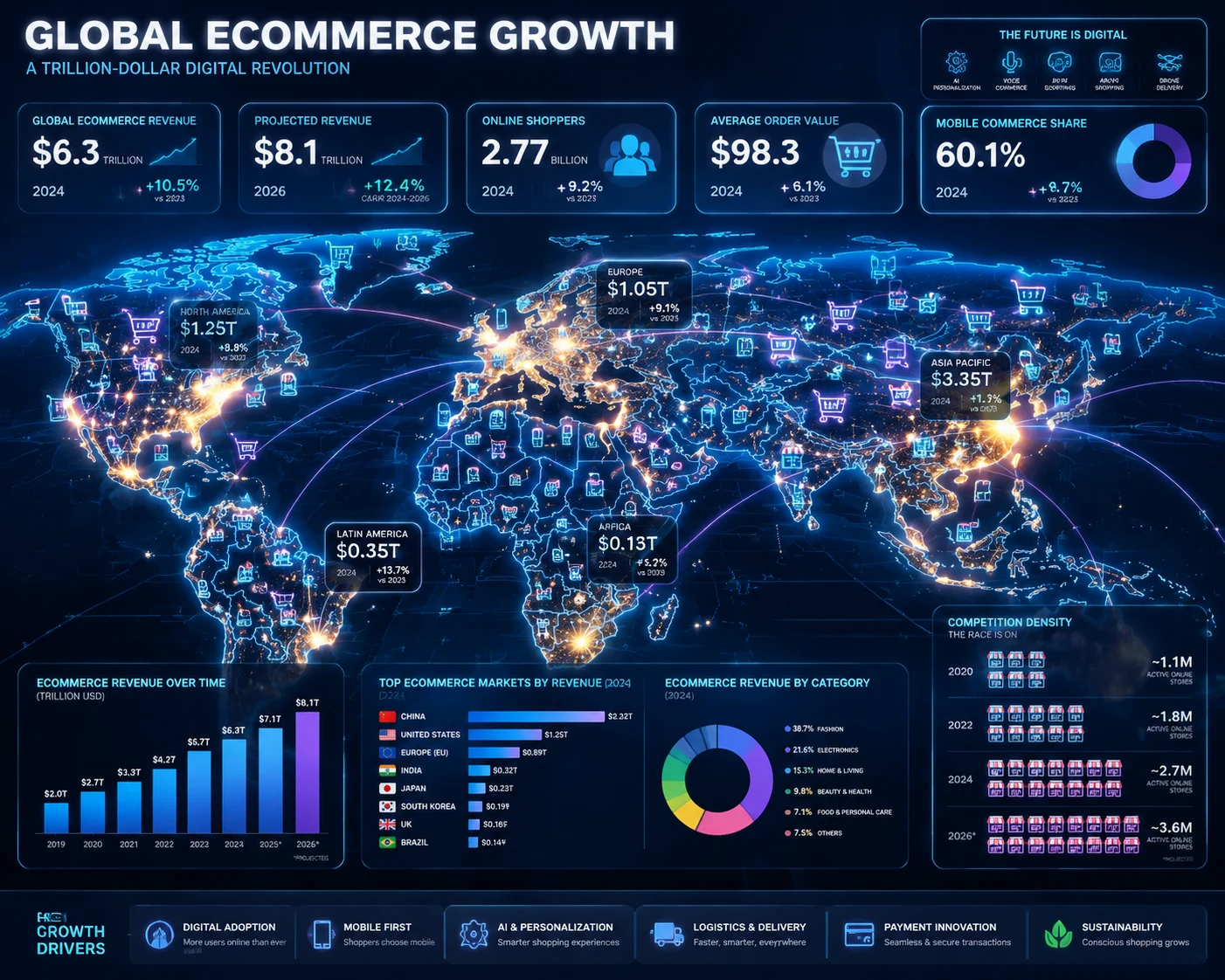
Customer acquisition costs in ecommerce have surged 60% over the past five years (Genesys Growth, 2026). The average DTC brand now spends $68–$84 to acquire a single customer, and in competitive verticals like fashion or beauty, that figure climbs to $90–$130 (Foundry CRO, 2026). Meanwhile, Meta CPMs are up 45% since 2022, Google CPCs have climbed 35%, and iOS privacy changes have crippled targeting precision.
This isn't a temporary blip. Store density has more than doubled in the past decade—in 2015, there was one online store for every 165 U.S. adults; by 2025, that ratio collapsed to just 76 (Omniconvert, 2026). You're fighting twice as hard for half the attention.
That structural shift is why the conversation around ecommerce marketing services has fundamentally changed. It's no longer about "which channels should I use?" It's about building a system of services that acquires customers efficiently, converts them predictably, and retains them profitably.
This guide breaks down every major category of ecommerce marketing service, maps them to the growth stage where they deliver the highest ROI, and gives you a framework for deciding what to build in-house, what to automate with tools, and what to hand to an agency—backed by real case studies and current benchmarks.
What Are Ecommerce Marketing Services (And What They're Not)
Ecommerce marketing services are specialized strategies and professional offerings designed to drive traffic, conversions, and repeat revenue for online stores. They span the entire customer lifecycle—from the moment a potential buyer becomes aware of your product to the post-purchase experience that turns them into a loyal advocate.
What separates ecommerce marketing services from general digital marketing is specificity. A generic digital agency might run your Facebook ads. An ecommerce specialist optimizes your product feed, structures campaigns around SKU-level margins, implements dynamic retargeting based on cart behavior, and ties every dollar of ad spend to measurable revenue—not vanity metrics.
That distinction matters because ecommerce has unique economics. You're dealing with catalog complexity, seasonal demand, inventory constraints, marketplace competition, and customer journeys that often involve five or more touchpoints before a purchase. According to the HubSpot 2026 State of Marketing Report, 75% of marketers now use five or more distinct marketing channels. Services that don't account for ecommerce's multi-channel reality waste budget.
The 9 Core Ecommerce Marketing Services That Drive Revenue
1. Search Engine Optimization (SEO)
SEO remains the foundation of sustainable ecommerce growth. Unlike paid advertising, organic traffic doesn't stop when you stop spending. According to industry data, 44% of shoppers begin their journey on a search engine (SellersCommerce, 2026), and organic search delivers customer acquisition costs of just $12–$25—compared to $45–$85 for paid social (EasyApps, 2026).
For ecommerce, SEO goes far beyond blog posts. It means structuring category architecture around real search demand, optimizing product titles and metadata for buyer-intent queries, implementing schema markup for rich snippets, and managing faceted navigation so filter pages don't waste crawl budget.
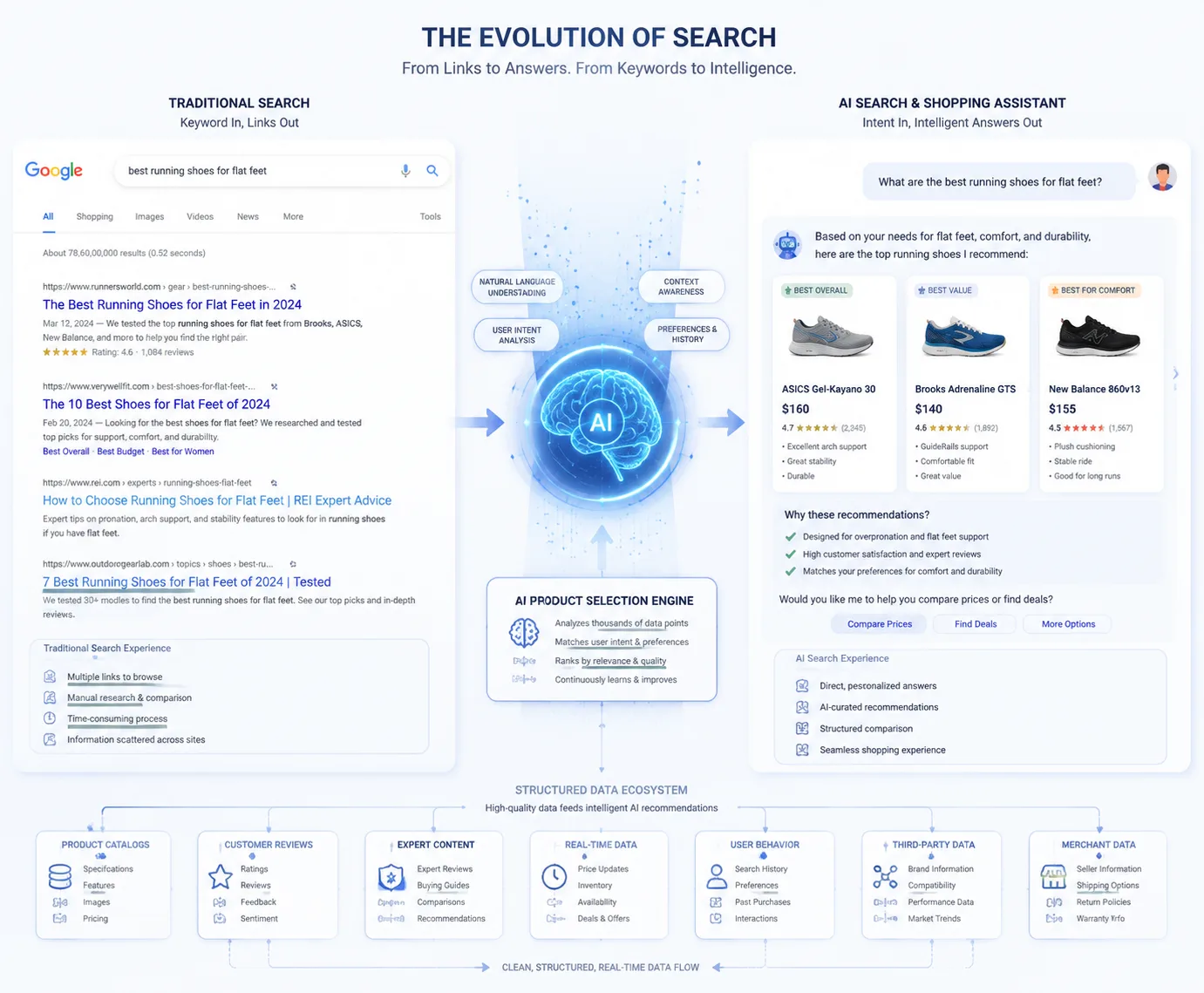
But here's the shift most guides miss: in 2026, SEO now means optimizing for AI search as well. Nearly 30% of marketers reported decreased traditional search traffic as consumers turn to AI tools (HubSpot, 2026). Meanwhile, AI-driven traffic to Shopify stores has grown 8x year-over-year, and orders from AI-powered searches increased 15x (Shopify Agentic Commerce Report, 2026). Your product schema, structured data, and content clarity now determine whether AI shopping assistants recommend your products—or your competitor's.
When it delivers the highest ROI: SEO compounds over time. Brands that invest consistently for 12+ months see organic traffic become their most profitable acquisition channel, with effectively zero marginal cost per visitor.
The hard truth: SEO is slow. If you need revenue this quarter, SEO alone won't get you there. It pairs best with paid channels in the short term.
2. Pay-Per-Click Advertising & Paid Media
Paid search and paid social capture demand that already exists. When someone searches "running shoes under $100," they're in buying mode. Your job is to be there with the right product at the right moment.
For most ecommerce brands, Google Shopping campaigns (now largely consolidated into Performance Max) should be the starting point. Google Shopping CPC averages $0.66–$0.71, while search CPC for ecommerce runs $1.16–$2.32 (Foundry CRO, 2026). TikTok offers significantly cheaper CPCs at around $0.50—40–50% below Facebook. Retail media networks—Amazon Ads, Walmart Connect—are projected to exceed $66 billion in U.S. spend in 2026 (eMarketer), making them the fastest-growing digital ad channel.
Real-world result: Nathan James, a furniture DTC brand, saw a 52% decrease in CAC and achieved 5.6x ROAS after switching to Shopify Audiences-powered targeting for their paid campaigns (Shopify case study).
When it delivers the highest ROI: When you have validated product-market fit, sufficient margins to absorb acquisition costs, and proper tracking infrastructure to optimize toward profitable ROAS.
The hard truth: Last-click attribution is lying to you. Many brands over-credit paid channels and under-credit organic, email, and content touchpoints. As Jetfuel puts it: "The Attribution Waterfall framework gives you a cleaner read on what's actually driving revenue" (Jetfuel, 2026).
3. Email & SMS Marketing
If there's one channel every ecommerce brand should master before anything else, it's email. The data is unambiguous: email marketing delivers roughly $36–$42 for every dollar spent across industries, rising to 45:1 for retail and ecommerce specifically (Litmus). Email customer acquisition costs average just $8–$15, making it the most cost-efficient channel available (EasyApps, 2026).
Here's a number that should reshape your budget allocation: automated email flows account for just 2–5% of total email send volume, yet they generate 37–41% of all email-driven revenue. The average revenue per automated email is $2.87, compared to $0.18 for scheduled campaigns—a 16x difference (Klaviyo, 2026 Benchmark Report).
Real-world results:
Every Man Jack, the $100M+ personal care brand, implemented predictive replenishment flows through Klaviyo—emails triggered by predicted reorder dates rather than arbitrary timelines. Result: 25% year-over-year increase in flow revenue (Klaviyo case study).
Dukier, a Shopify brand, achieved a 525% revenue increase using Omnisend's omnichannel email and SMS automation, with nearly 50% of total revenue attributed to email (Omnisend, 2026).
One ecommerce brand migrating from Mailchimp to Klaviyo saw a 4.8x increase in email-attributed revenue (+940%) in the first year, driven primarily by implementing proper automation flows that hadn't existed before (Scandiweb case study).
When it delivers the highest ROI: Immediately. Email is one of the few channels that pays for itself within the first month of proper implementation.
The hard truth: Deliverability is the silent killer. With Google and Yahoo's bulk-sender requirements now strictly enforced, poor authentication and careless unsubscribe handling will send your campaigns straight to spam.
4. Social Media & Social Commerce
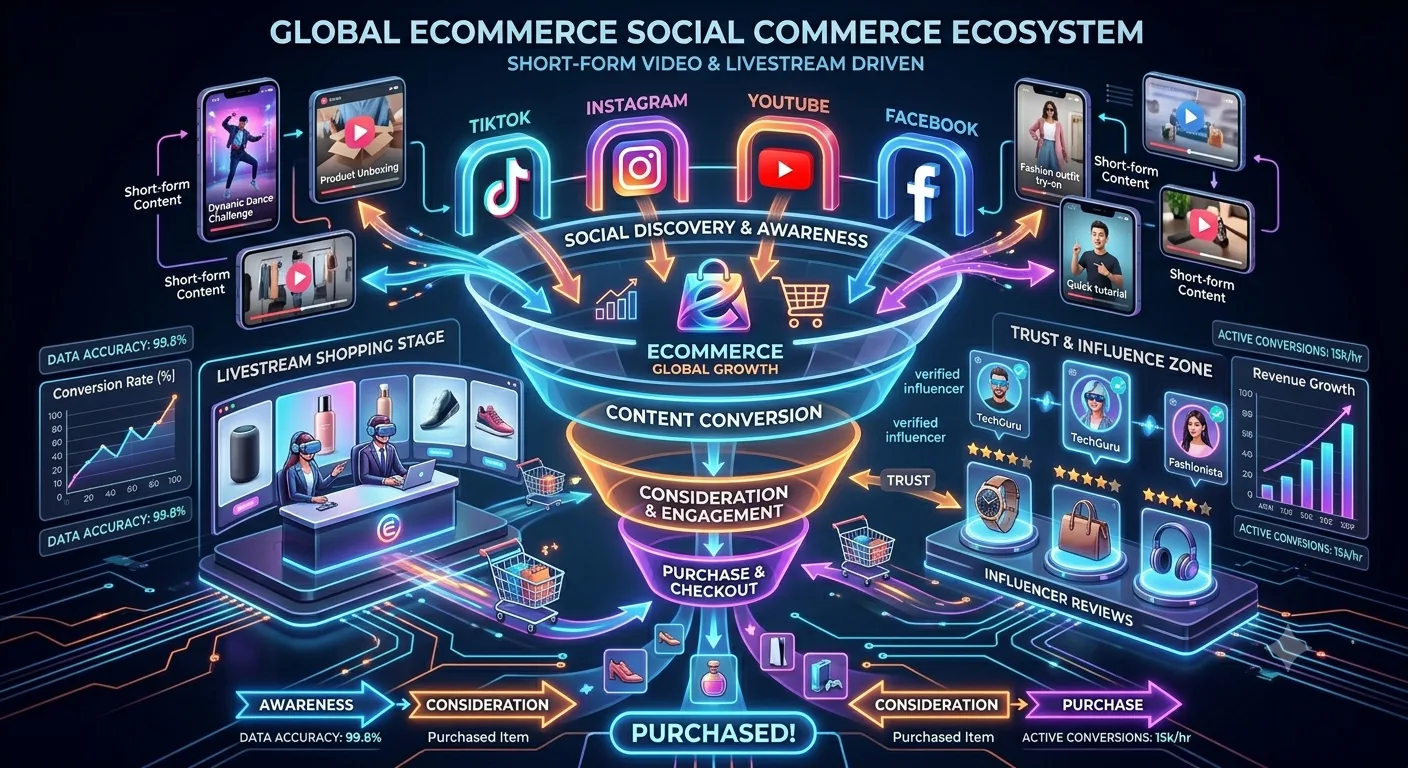
Social platforms have evolved from brand awareness channels into full-funnel commerce engines. Global social commerce sales are projected to exceed $1.2 trillion in 2026, growing 25–30% annually (EasyApps, 2026). TikTok Shop alone is expected to generate over $23.4 billion in U.S. sales this year (Foundry CRO, 2026).
Short-form video is the dominant format. According to the HubSpot 2026 State of Marketing Report, 60% of marketers now use short-form video, and 104% more marketers named it their most valuable channel compared to 2024. Live shopping sessions on TikTok Shop convert at 5–12%, far above standard ad click-through rates.
Real-world result: Hismile, a teeth-whitening brand on Shopify, built a $450M+ annual business largely through influencer-driven social content funnels, using bold visual branding and short-form video to drive both awareness and conversion at a lower CAC than traditional paid media (Omnisend, 2026).
When it delivers the highest ROI: Social excels at the top and middle of the funnel—product discovery, brand affinity, and impulse purchases. Brands with visually compelling products (fashion, beauty, home, food) see the strongest returns.
5. Conversion Rate Optimization (CRO)
Most ecommerce brands think they have a traffic problem when they actually have a conversion problem. The average mobile conversion rate sits around 2.2%, compared to 3.7% on desktop (EasyApps, 2026). Even small improvements compound dramatically.
Here's the math that makes CRO arguably the highest-leverage service on this list: a 1% increase in conversion rate can lead to a 20–30% reduction in net CAC (Presta, 2026). You're getting more revenue from traffic you've already paid to acquire.
CRO encompasses A/B testing, UX audits, checkout flow optimization, page speed improvements, product page redesigns, trust signal placement, and mobile experience refinement. Some specific benchmarks to know: Shopify stores with well-optimized checkouts achieve 59–66% completion rates versus the 20–40% industry average. Express checkout methods (Apple Pay, Google Pay) deliver a 15–37% conversion lift (Foundry CRO, 2026).
Real-world results:
White Stuff, a UK apparel brand, saw a 100% improvement in mobile load times and a 37% boost in conversions after migrating to a composable architecture (BigCommerce case study).
Gunner Kennels implemented Shopify's 3D/AR product visualization so customers could see kennel sizes in their homes. Conversions increased 40% (Shopify case study).
Products with 3D models see a 94% higher conversion rate than those with standard images alone, according to Shopify's data (Presta, 2026).
When it delivers the highest ROI: CRO delivers the fastest returns for stores with meaningful traffic (10,000+ monthly visitors) but underperforming conversion rates. Fix the leaky bucket before pouring more water in.
6. Marketplace Management
Two-thirds of all online purchases happen on marketplaces rather than brand-owned websites. Amazon alone holds approximately 37.6% of U.S. ecommerce—more than six times its nearest competitor, Walmart at 6.4% (Nova Data, 2026). Amazon's advertising revenue reached $17.2 billion in Q1 2026, up 24% year-over-year.
Marketplace management services handle product listing optimization, advertising strategy (Sponsored Products, Sponsored Brands, DSP), inventory planning, pricing strategy, and review management. The built-in traffic dramatically reduces CAC—marketplace sellers benefit from acquisition costs roughly 50% lower than DTC channels, though they trade margin and customer data for that advantage.
When it delivers the highest ROI: If your product category has strong search demand on Amazon or Walmart, marketplace management should be a priority from day one.
The hard truth: You're building on rented land. The smartest brands use marketplace revenue to fund DTC growth and build direct customer relationships they actually own.
7. Influencer & Creator Marketing
Consumers trust creators far more than traditional advertising. Influencer marketing returns about $5.78 for every dollar spent, and influencer-acquired customers show 37% higher retention rates. Critically, micro-influencer campaigns cost 6.7x less than celebrity campaigns while delivering more authentic engagement (AffNinja, 2026).
Real-world result: Duradry, a personal care brand, shifted from paid ads to a structured micro-influencer and affiliate program through Shopify Collabs. Within seven months, they built a community of 250+ creator partners, generated $50,000 in direct sales, and saw customer acquisition costs decrease by 29%—all by paying commission or sending free product instead of buying ad impressions (Shopify case study).
When it delivers the highest ROI: Influencer marketing excels for products that benefit from social proof and demonstration—beauty, fitness, fashion, food, tech accessories. The key is matching creator audience to buyer persona, not chasing follower counts.
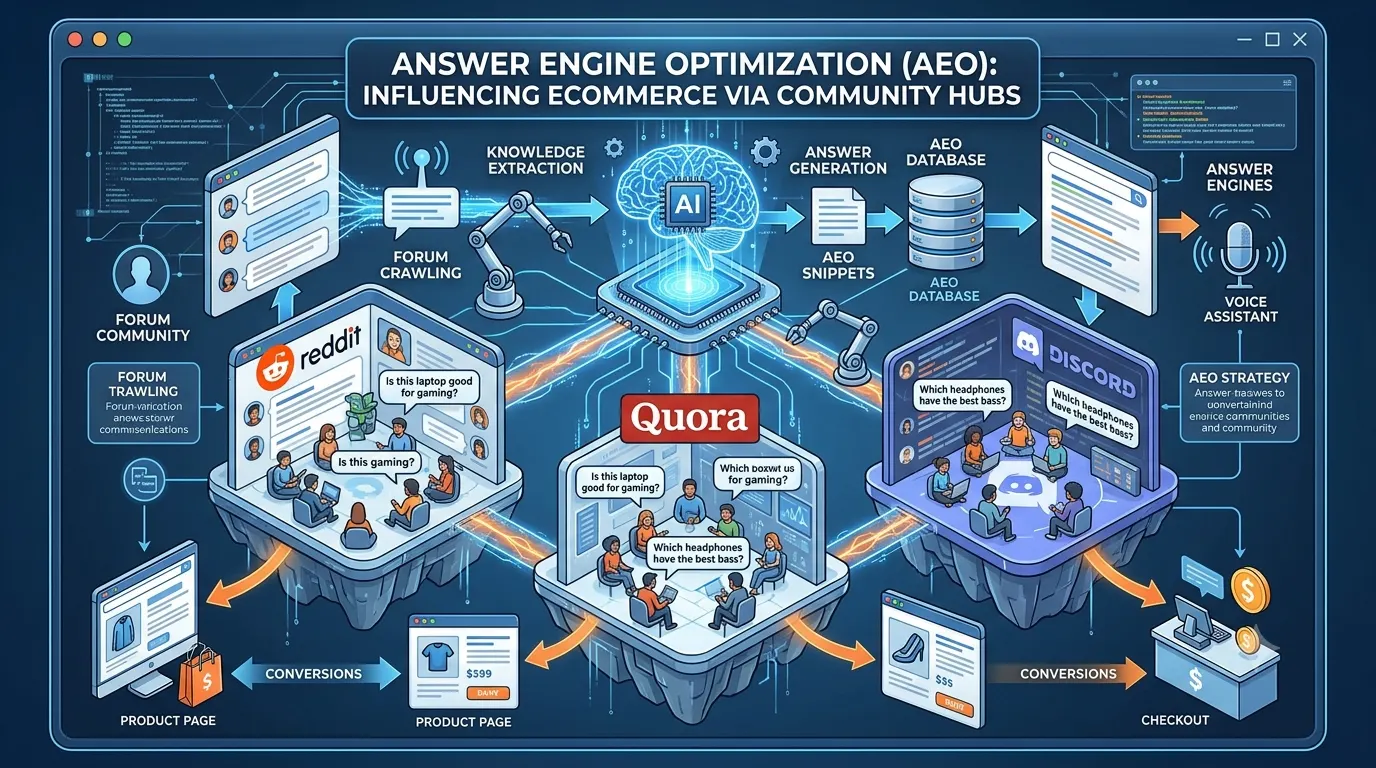
8. Community & Forum Marketing
This is the most underrated category on this list, and it's becoming critical as AI-driven search reshapes product discovery.
Platforms like Reddit and Quora are increasingly where real purchase decisions happen. When someone posts "What's the best running shoe for flat feet?" in a subreddit, they're not browsing—they're about to buy. Reddit's influence on search has grown significantly, with Google's algorithm updates giving more visibility to authentic community discussions. And with AI assistants pulling answers from forum threads, your brand's presence in these conversations now influences how AI recommends products—a discipline known as Answer Engine Optimization (AEO).
Tools like Leadmore AI are making community marketing more accessible for ecommerce brands. Leadmore AI specializes in Reddit marketing, using AI to identify relevant subreddits, track high-intent leads in real time, and manage content publishing through established, high-karma accounts—solving the notorious problem of account bans that plague manual Reddit marketing efforts. For ecommerce brands selling high-ticket items, SaaS products, or niche electronics, this kind of targeted community presence can deliver leads at a fraction of paid advertising costs.
Other approaches include manual community engagement (effective but time-intensive), Quora marketing, and Discord community building.
When it delivers the highest ROI: Community marketing works best for brands with products that generate discussion—tech products, specialty goods, enthusiast categories, and anything people actively research before buying. The ROI is particularly strong when content also feeds AEO and organic search visibility.
9. Customer Retention & Loyalty Programs
Here's the most important number in this entire article: a 5% increase in customer retention can boost profits by 25–95% (Harvard Business Review). The probability of selling to an existing customer is 60–70%, compared to just 5–20% for a new prospect. Returning customers spend 67% more per order and convert at 3–5x the rate of new visitors.
Yet most ecommerce brands still over-index on acquisition. The math no longer supports this. When your average CAC is $68–$84 and the first order averages $34 in many categories, breakeven doesn't happen until the third purchase. Without retention, you're losing money on every customer.
Retention services include loyalty program design and management, subscription implementation, post-purchase email flows, VIP tiers, referral programs, and personalized re-engagement campaigns. Loyalty programs generate an average 5.2x ROI, with redeemers spending 3.1x more than non-redeemers. The subscription ecommerce sector is expected to surpass $450 billion in 2026 (SellersCommerce, 2026).
Real-world benchmark: Top-performing ecommerce brands on Klaviyo drive 38–45% of total revenue from email and SMS combined, with repeat purchase rates of 38–48% over 12 months. The median store is far below this, which represents a massive retention gap most brands haven't addressed (Darkroom, 2026).
When it delivers the highest ROI: Retention becomes the highest-leverage investment once you have a meaningful customer base (1,000+ customers). For stores with 5,000+ customers, shifting to a 50/50 or even 40/60 allocation favoring retention over acquisition is often the most profitable move.
The Service-Stage Matrix: Matching Services to Your Growth Phase
One of the most expensive mistakes in ecommerce is investing in the wrong services at the wrong time. This matrix maps service priority to business maturity, based on patterns observed across hundreds of ecommerce brands:
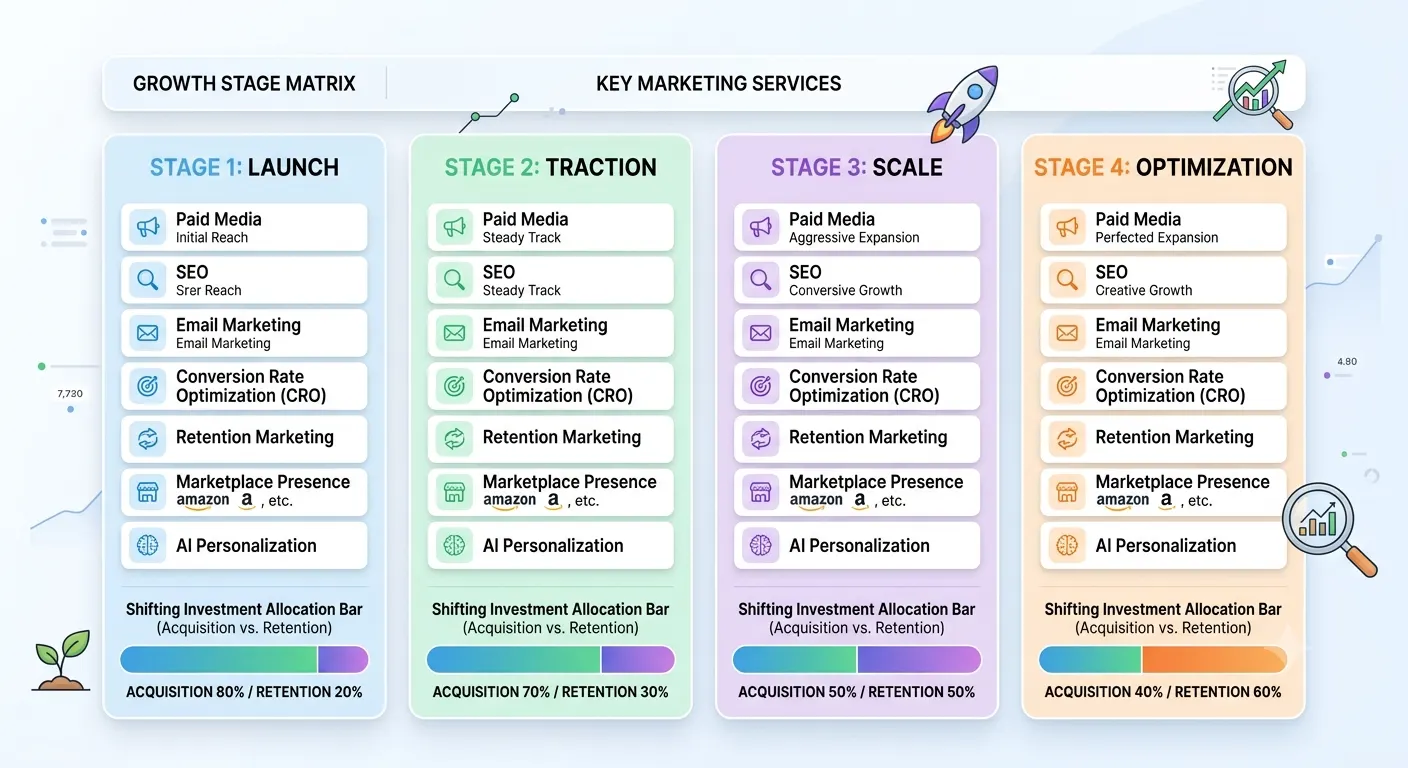
Stage 1: Launch (Pre-Revenue to $500K/year)
Primary goal: Validate product-market fit and generate initial traction.
Focus on: Paid media (small, tightly targeted campaigns), marketplace presence (if applicable), basic email automation (welcome + cart abandonment flows), and foundational SEO (site structure, product page optimization).
Investment mix: 80% acquisition / 20% retention. You need customers before you can retain them.
Tools over agencies at this stage. Klaviyo's free tier, basic Google Ads, one social platform done well. Agency spend rarely makes sense when you're still finding your positioning.
Stage 2: Traction ($500K–$2M/year)
Primary goal: Scale what's working without destroying unit economics.
Add: Expanded paid media management, content marketing and SEO, social media (organic + paid), initial influencer partnerships, and CRO.
Investment mix: 70% acquisition / 30% retention. You're building the retention engine while acquisition scales.
Tools earn their keep here: Klaviyo (email/SMS), Ahrefs or Semrush (SEO), community marketing tools like Leadmore AI for Reddit presence, Triple Whale or Northbeam for attribution. Hiring a specialist agency for one or two core channels—usually paid media or SEO—begins to make sense.
Stage 3: Scale ($2M–$10M/year)
Primary goal: Build systematic marketing across channels without depending on heroic individual efforts.
Add: Full retention and loyalty programs, marketplace management (Amazon, Walmart), advanced CRO with dedicated testing roadmaps, SMS marketing, community marketing at scale.
Investment mix: 55% acquisition / 45% retention. The key metric shifts from "did we grow?" to "did we grow profitably?"
Most brands at this stage work with 1–2 agencies and supplement with specialized tools. Attribution and measurement infrastructure become critical.
Stage 4: Optimization ($10M+/year)
Primary goal: Margin expansion—reduce CAC, increase LTV, improve operational efficiency.
Add: Advanced AI-driven personalization, sophisticated attribution modeling, international expansion services, omnichannel integration.
Investment mix: 40% acquisition / 60% retention. Companies with strong omnichannel engagement retain 89% of customers versus 33% for weak implementations.
McKinsey's research confirms the payoff: companies that excel at personalization generate 40% more revenue from those activities than average performers, and personalization drives 5–15% total revenue lift with marketing-spend efficiency gains of 10–30%.
DIY vs. Tools vs. Agency: A Decision Framework
The "should I hire an agency?" question has a more nuanced answer than most people realize:
Build in-house when: The function is core to your competitive advantage, requires deep product knowledge that's hard to transfer, or demands real-time responsiveness. Examples: brand voice, product photography, customer service, community management strategy.
Use specialized tools when: The task is well-defined and repeatable, technology can replace manual effort at lower cost, or the function benefits from automation. Key platforms by category:
Email & SMS: Klaviyo (dominant for ecommerce), Omnisend, Drip
SEO & Content: Ahrefs, Semrush, Clearscope, SurferSEO
Attribution: Triple Whale, Northbeam (critical when paid media attribution lies to you)
Community Marketing: Leadmore AI (Reddit-specific lead tracking and safe content publishing), SparkToro (audience research)
Retention & Loyalty: Yotpo (reviews + loyalty + SMS), LoyaltyLion, Smile.io
CRO: Hotjar, Microsoft Clarity (free), VWO, Optimizely
Analytics: Google Analytics 4, Looker Studio (free dashboards)
Hire an agency when: You need specialized expertise you can't quickly develop, the work volume exceeds your team's capacity, or you need access to enterprise-level tools and relationships. Examples: paid media management at scale, technical SEO for complex catalogs, marketplace management across multiple platforms.
The hybrid model wins. The most effective ecommerce brands own their strategic direction in-house, automate repeatable tasks with tools, and partner with agencies for specialized execution.
How to Evaluate an Ecommerce Marketing Service Provider
Whether you're hiring an agency, choosing a platform, or evaluating a consultant, these criteria separate strong providers from mediocre ones:
Ecommerce-specific experience. Ask about catalog sizes managed, platforms worked with (Shopify, BigCommerce, WooCommerce, Magento), and whether they understand SKU-level economics. General digital marketing skills don't automatically translate.
Transparent reporting tied to revenue. The best providers report on revenue, ROAS, CAC, customer lifetime value, and contribution margin—not impressions, clicks, or follower counts. As the HubSpot 2026 report notes, 73% of marketing budgets now receive more scrutiny than in the past.
Proven methodology with flexibility. Look for a structured approach, but avoid providers applying the same playbook regardless of category, margin structure, or growth stage.
Realistic timelines. SEO takes 6–12 months for significant results. Paid media can show returns within weeks but requires 2–3 months to reach peak performance. Anyone promising overnight results is selling something other than marketing expertise.
Fair pricing structure. Agencies typically charge a percentage of ad spend (10–20%), a flat monthly retainer ($2,000–$15,000+), or performance-based fees. The best arrangements often combine a modest retainer with performance bonuses that align incentives.
Ecommerce Marketing Benchmarks: Know Your Numbers
The following benchmarks represent current (2026) performance data. Use them to diagnose where your store is underperforming and where services can have the most impact:
Acquisition Costs by Channel:
Email marketing: $8–$15 CAC (lowest)
Organic search/SEO: $12–$25
Paid social (Meta/TikTok): $45–$85
Google Ads (search): $50–$75
Display advertising: $65–$120
Acquisition Costs by Vertical:
Food & grocery: $15–$35
Pet products: $20–$45
Fashion & apparel: $90–$120
Beauty & cosmetics: $90–$130
Electronics: $100–$377
Luxury: $175–$400+
Email Performance (Top 10% Brands):
Email + SMS as % of total revenue: 38–45%
Flow revenue as % of email revenue: 58–65%
Welcome flow conversion rate: 12–18%
Cart abandonment recovery rate: 8–12%
Revenue per recipient (flows): $0.25–$0.45
Conversion Benchmarks:
Average ecommerce conversion rate: 2.5–3.0%
Mobile conversion rate: 2.2% (vs. 3.7% desktop)
Checkout completion (optimized): 45–55%
Express checkout conversion lift: 15–37%
Sources: Foundry CRO, Klaviyo 2026 Benchmarks, Darkroom Agency, EasyApps
Where Ecommerce Marketing Services Are Heading
Several trends are reshaping the landscape faster than most brands realize:
AI is the operating system, not a feature. Eighty-four percent of ecommerce businesses rank AI as their top priority (WiserReview, 2026). McKinsey projects generative AI will create $240–390 billion in economic value for retailers through improved personalization, automated content, and enhanced service. The 86.4% AI adoption rate among marketing teams reported by HubSpot in 2026 (up from 41% in 2024) confirms this has moved from experimentation to infrastructure.
Answer Engine Optimization (AEO) is the new frontier. With AI assistants pulling answers from forums, product reviews, and authoritative content, brands now sell to two audiences: human shoppers and the AI agents acting on their behalf. This makes community presence, structured data, and brand mentions across trusted platforms more important than traditional keyword rankings alone. The Shopify data showing 15x growth in orders from AI-powered searches underscores the urgency.
First-party data is king. With third-party cookies disappearing and 93% of marketers reporting that personalization improves leads or purchases (HubSpot, 2026), brands that build their own customer databases—email lists, SMS subscribers, loyalty members—will outperform those dependent on rented audiences.
Retention is the new acquisition. The math is inescapable. When CAC averages $68–$84 but a 5% retention improvement drives 25–95% more profit, the highest-leverage investment for most established brands is in the customers they already have.
Making It All Work Together
The brands winning in ecommerce in 2026 aren't the ones with the biggest budgets. They're the ones who build a system where every channel reinforces the others.
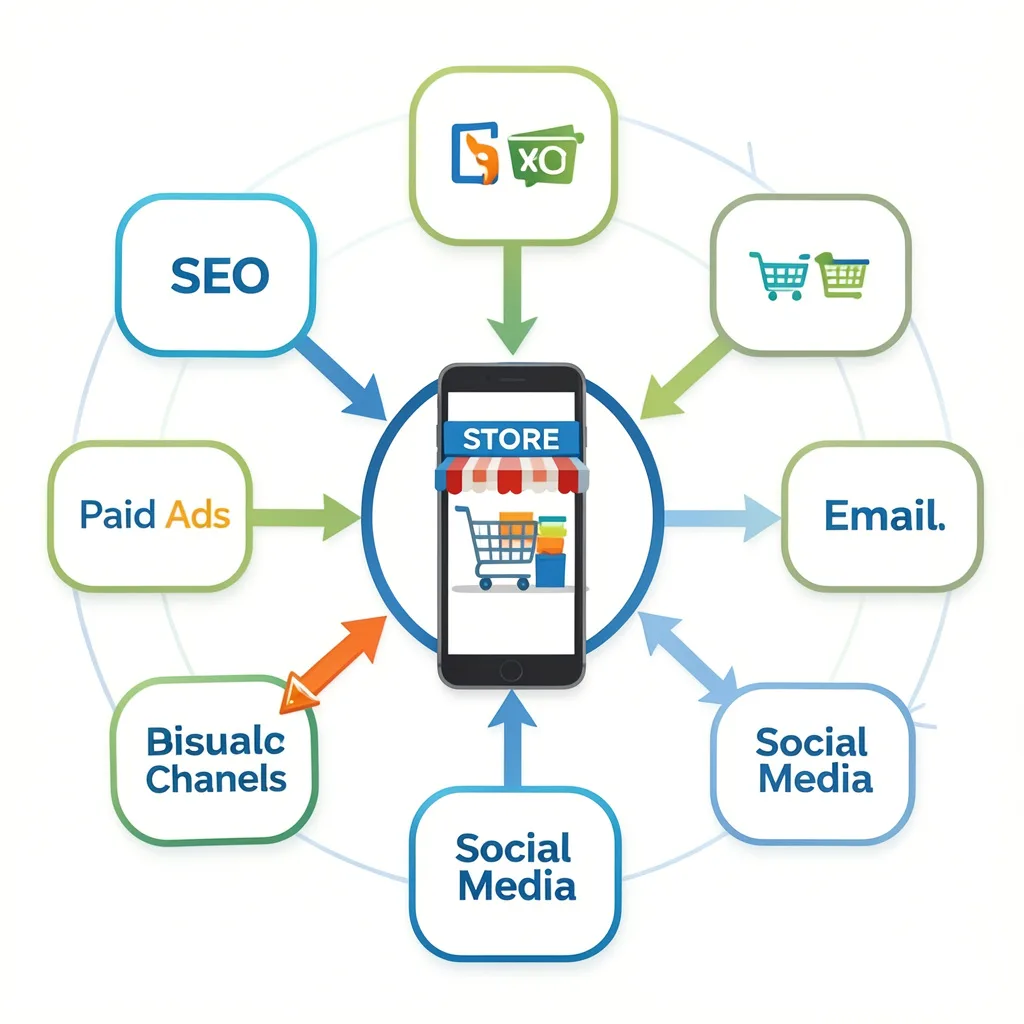
SEO drives organic traffic to product and content pages. Paid media captures high-intent demand and retargets visitors who didn't convert. Email and SMS nurture leads and drive repeat purchases. Social media builds brand awareness and fuels discovery. Community marketing on platforms like Reddit generates authentic conversations that feed both AEO and organic search. CRO ensures the traffic you worked so hard to get actually converts. And retention programs turn one-time buyers into lifetime customers whose LTV justifies your acquisition costs.
No single service, channel, or tool will transform your business. But a thoughtfully assembled system of ecommerce marketing services—matched to your growth stage, margin structure, and competitive landscape—is the difference between burning cash and building a durable company.
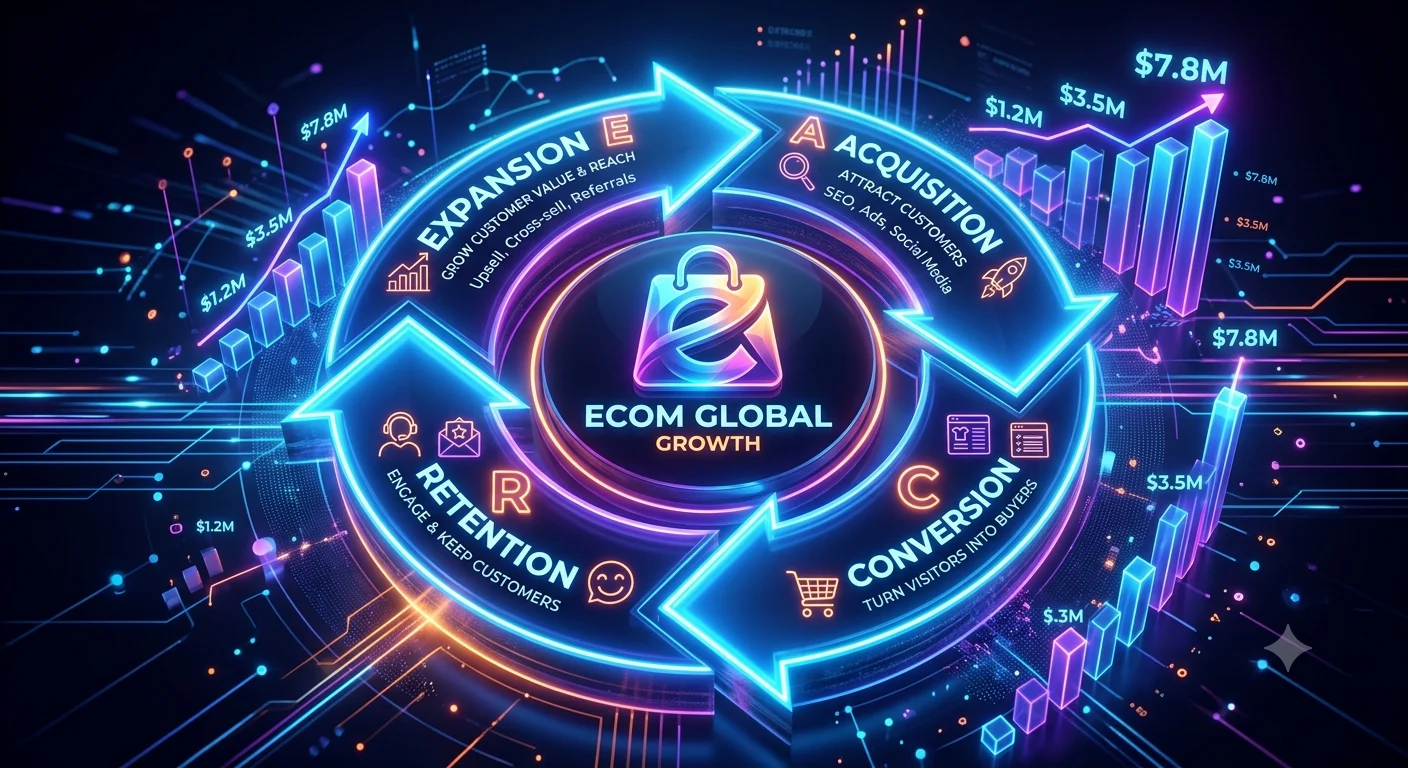
The $6.88 trillion ecommerce market isn't slowing down. The brands that capture their share won't be the ones who spend the most. They'll be the ones who spend the smartest.
Sources & Further Reading
U.S. Census Bureau — Q1 2026 Retail Ecommerce Sales Report (https://www.census.gov/retail/mrts/www/data/pdf/ec_current.pdf)
McKinsey & Company — "The Value of Getting Personalization Right—or Wrong—Is Multiplying" (https://www.mckinsey.com/capabilities/growth-marketing-and-sales/our-insights/the-value-of-getting-personalization-right-or-wrong-is-multiplying)
HubSpot — 2026 State of Marketing Report (https://www.hubspot.com/state-of-marketing)
Klaviyo — 2026 Email Marketing Benchmarks (https://www.klaviyo.com/products/email-marketing/benchmarks)
Shopify — Enterprise Case Studies (https://www.shopify.com/enterprise/blog/topics/case-study)
Foundry CRO — Ecommerce Marketing Benchmarks 2026 (https://foundrycro.com/blog/ecommerce-marketing-benchmarks-2026/)
Statista — Global Ecommerce Statistics (https://www.statista.com/topics/871/online-shopping/)
Harvard Business Review — Customer Retention Economics (https://hbr.org/)
Aberdeen Group — Omnichannel Engagement Research (https://www.aberdeen.com/)